William Edward Burghardt Du Bois
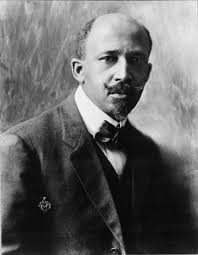
W.E.B. Du Bois was born on February 23, 1868 in Great Barrington, Massachusetts. At that time Great Barrington had a very small population of blacks, something around 50 out of a population of about 5,000. Therefore he was not faced with severe racism there. Nevertheless anger and cruelty was implicitly seen in his society and that made him turn into an angry and silent person. This withdrawn behavior followed him throughout his life.
His time saw a lot of “reconstructions” to itself. The Civil Rights Acts of 1866, the fourteenth amendment, the Military Reconstruction acts, fifteenth amendment, and the Civil Rights acts of 1875. He was born in the same year as the passage of the fourteenth amendment which made all native born or naturalized persons American citizens and prohibited states specially the south to deprive them off their rights including life, liberty and property without due process of law. But as history shows amendments where passed and supported by the Republicans in the north and the southerners, who were still bitter at their northern neighbors on the civil war, started to make the black codes and other cruel laws like the Jim Crow segregation.
When he went to high school he became very interested in the development of his race. He believed it was his duty to politicize his people. Therefore even when he was at school he managed to do some newspaper reporting. Du Bois was a very talented student and like many others he desired to go to Harvard University but going to Harvard needed a strong financial support. So with the aid of his family and friends he was able to attend Fisk College, for which he had to move to Nashville, Tennessee.
There was a great difference between the north and the south at that time. This was Du Bois' first trip south. During his years at Fisk he realized the discrimination blacks had to bear and it was during these years that he had to do something to emancipate his people. Consequently, he became an American civil rights activist, leader, Pan-Africanist, sociologist, educator, historian, writer, editor, poet, scholar, writer, editor, and an impassioned orator. He tried to learn more about the south by teaching in a school; it was then that he learned that the black people lived in poverty, prejudice and segregation.
After graduation from Fisk, Du Bois entered Harvard (via scholarships) his education focused on philosophy, centered in history. It then gradually began to turn toward economics and social problems. He received his bachelor's degree in 1890 and immediately began working toward his master's and doctor's degree.
Du Bois completed his master's degree in the spring of 1891. He received a grant from President Hayes to study at the University of Berlin in Germany which was considered to be one of the world's finest institutions of higher learning. But he wasn’t able to get his degree from Berlin and was urged to get it from Harvard due to the interest of his supporters. During the two years Du Bois spent in Berlin, he began to see the race problems in the Americas, Africa, and Asia, and the political development of Europe as one. This was the period of his life that united his studies of history, economics, and politics into a scientific approach of social research. At the age of twenty-six, he began his life's work. He accepted a teaching job at Wilberforce in Ohio.
The year 1896 was a totally new start for Du Bois. He accepted a special fellowship at the University of Pennsylvania to conduct a research project in Philadelphia's seventh ward slums. This responsibility provided him with the opportunity to study Blacks as a social system. Du Bois eagerly devoted himself to his research. He wanted to find the cure to the black problem which was color prejudice. The outcome of this exhaustive endeavor was published as The Philadelphia Negro. "It revealed the Negro group as a symptom, not a cause; as a striving, palpitating group, and not an inert, sick body of crime; as a long historic development and not a transient occurrence." Du Bois is acknowledged as the father of Social Science because he was the first person to take a scientific approach to studying a social phenomenon.
After the completion of his study, Du Bois accepted a position at Atlanta University to expand his teachings in sociology. For thirteen years there he wrote and studied Negro morality, urbanization, Negroes in business, college-bred Negroes, the Negro church, and Negro crime. His studies really helped all social reforms. It is said that because of his outpouring of information "there was no study made of the race problem in America which did not depend in some degree upon the investigations made at Atlanta University."
In January of 1906 the "Niagara Movement" called after the site of the meeting was formed. Its objectives were to advocate civil justice and abolish caste discrimination; but it failed. In 1909 most members of the Niagara Movement merged with some white liberals and thus the National Association for the Advancement of Colored People (NAACP) was born. Du Bois was not completely satisfied with the group but agreed to stay on as Director of Publications and Research.
The main source of spreading NAACP policy and news concerning Blacks was the Crisis magazine, which was directed by Du Bois. Du Bois was an outspoken opponent of the scientific racism of his day. Du Bois argued extensively against the then prevalent notion that African-Americans were biologically inferior to whites and issued his critiques in the same magazine.
The NAACP was, at that time, under the leadership of whites, to which Du Bois objected. He always felt that Blacks should lead. This gave Du Bois the ability to continue his assault on the injustices done to Blacks.
World War I had dramatic affects on the lives of Black folks. Firstly, the Armed Forces refused to call up Blacks, but finally gave up and put the "colored folks" in roles which they could be pushed over by whites. Secondly, this war caused a great immigration, since the north was looking for laborers and southern blacks moved north in flocks. It was then that the northern whites became angry at them for stealing their jobs. As a result lynching became very popular and after the war black veterans went back home only to be torn off their army cloths as welcome from those whom they had fought for.
Using the Crisis as his vehicle he attacked all the injustice he saw. His strong attacks and the reaction of his followers caused some congressional actions such as bringing forth legal actions against lynches and setting up a federal work plan for returning veterans. This period was the pinnacle of his success.
Shortly after the Armistice was signed, Du Bois headed to France in 1919 to represent the NAACP as an observer at the Peace Conference. It was there that he decided to organize a Pan-African conference to bring attention to the problems of Africans around the world. But the concept didn’t work due to the lack of interest by the more influential black organizations. He decided to hold another Pan-African meeting in 1921 which failed even more severely.
Other movements like the Garvey movement, which Du Bois tried to ignore first but then started criticizing, received much more mass attention than did Du Bois intellectual movement.
Du bois tried for the third time to hold the Pan-African meeting but as expected the turnout of this one was small too. After the conference he headed for Africa, during the trip through "the eternal world of Black folk" he made a characteristic observation–"The world brightens as it darkens." This trip changed his point of view towards the African American people and what he had been preaching all those years. Du Bois noted how America avoided dealing with the issues of color, and how his approach of "educate and agitate" appeared to have no impact upon people. He felt that his ideological approach to the "problem of the twentieth century" had to be revised. Du Bois' trip to Russia in 1927, after the Russian revolution, his learning about Marx and Engels, his seeing the beginning of a new nation form with regard to class, became a pretext for the revision he had in mind. He wasn’t able to trust white capitalists and white workers anymore so he went on to do everything in a segregated socialized economy.
By 1930 he had become thoroughly convinced that the basic policies and ideals of the NAACP must be modified or discarded. There were two alternatives: Change the board of directors of the NAACP (who were mostly white) which meant substituting a group which agreed with his programs, or leaving the organization.
He resumed his duties at Atlanta University and completed two major works. His book Black Reconstruction dealt with the socio-economic development of the nation after the Civil War. This masterpiece portrayed the contributions of the Black people to this period, whereas before, the Blacks were always portrayed as disorganized. His second book of this period, Dusk of Dawn, was completed in 1940 and expounded its view to Africans and African Americans struggle for freedom.
During the last phase of his political and social activities he committed himself to something beyond protecting only a single social group to a "to a world conception of proletarian liberation." As the chairman of the Peace Information Center, he demanded the outlawing of atomic weapons. After which he was indicted under the foreign Agents Registration Act. Even though he was acquitted but this made him say –"In my own country for nearly a century I have been nothing but a NIGGER." By the time the U.S. press published this statement, he was residing in Ghana; an expatriate from the United States. Du Bois became a Ghanaian citizen and an official member of the Communist party.
On August 27, 1963, on the eve of the March on Washington, Du Bois died in Accra, Ghana at age 95.
He was honored by a few because of his Pan-Africanist activities but he was neglected by those who never saw his efforts in uniting the mentally and physically enslaved people all around the world.
________________________________________
References
Dusk of Dawn (W.E.B. DuBois)
W.E.B. DuBois: Propagandist of the Negro Protest (Elliott M. Rudwick)


